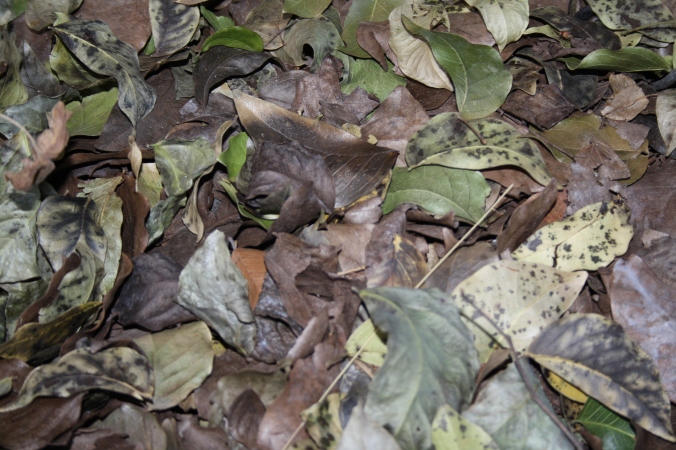
When Piet first arrived here nine years ago the farm now known as Sitikela was bush. Thick, solid, tangled, dry bush. And it was brown. The trees were brown, the grass was brown, the leaves scattered on the sand were brown – even the sand was brown.
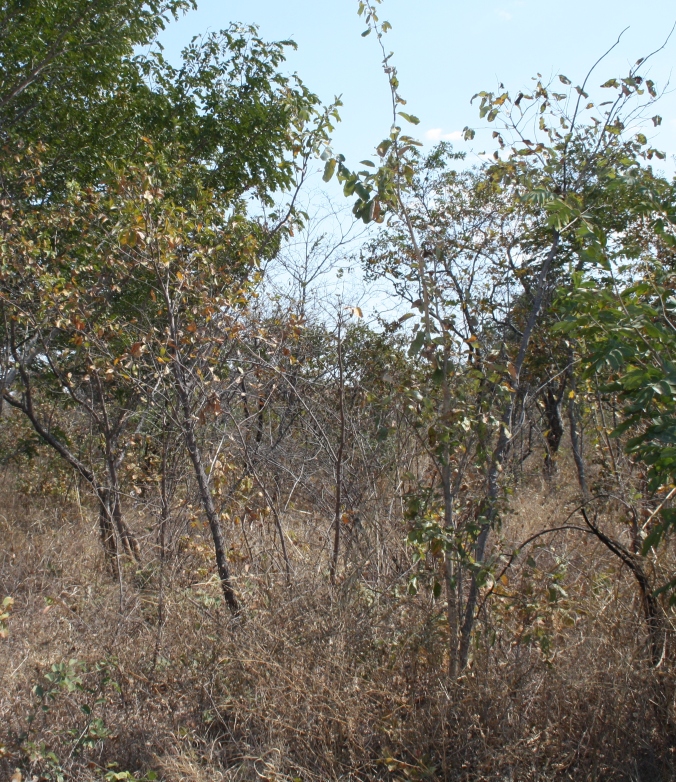
African winter bush
As he drove up a sandy, unkempt track he noticed the top of a solitary tree towering above the rest of the forest – and it was green! Although it was mid-winter, the heat of the day was almost unbearable and the shade of this tree looked like a likely spot to set up camp; Piet and Sarel, his business partner, lived in tents under that tree for two years while they set to work developing the farm and today our house nestles comfortably in that same shade.
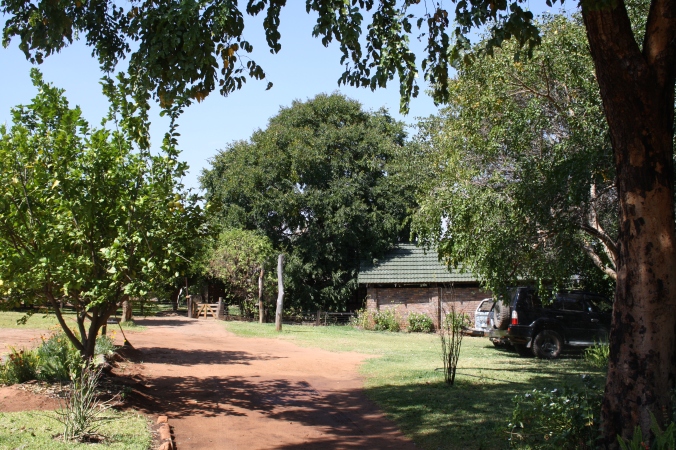
Home Sweet Home
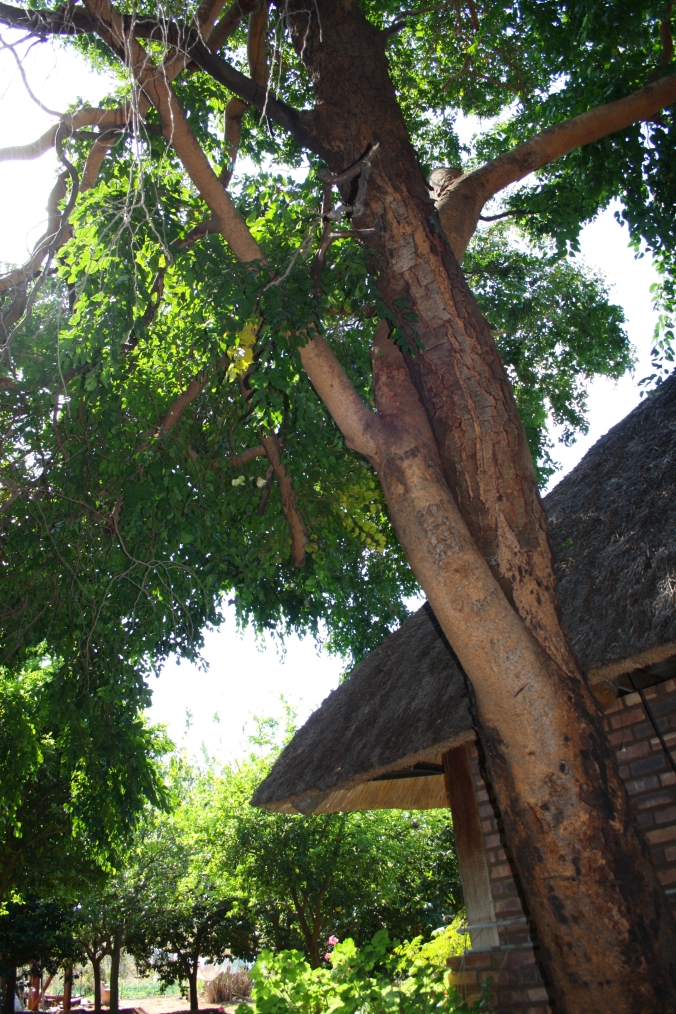
The rough and the smooth
Guibourtia coleosperma, also known as Rhodesian Copalwood, African Rosewood and Large False Mopane is a beautiful, mostly evergreen tree which occurs almost exclusively on Kalahari sand. The tree is ubiquitous on our farm and we have at least ten growing in our garden. Our offices are also built under the shade of one of these magnificent specimens.
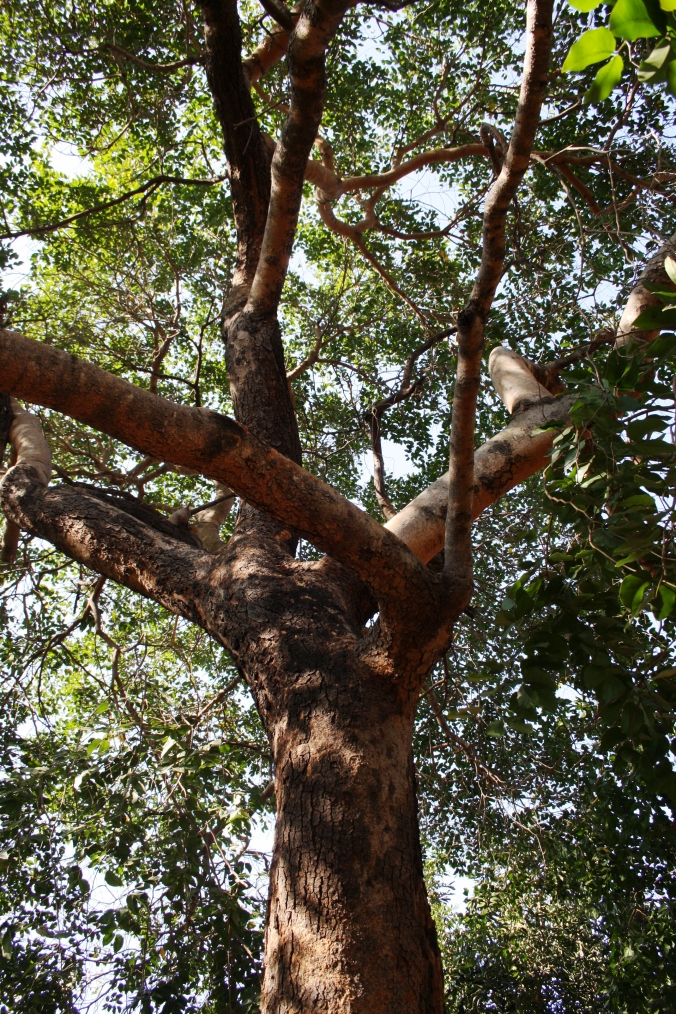
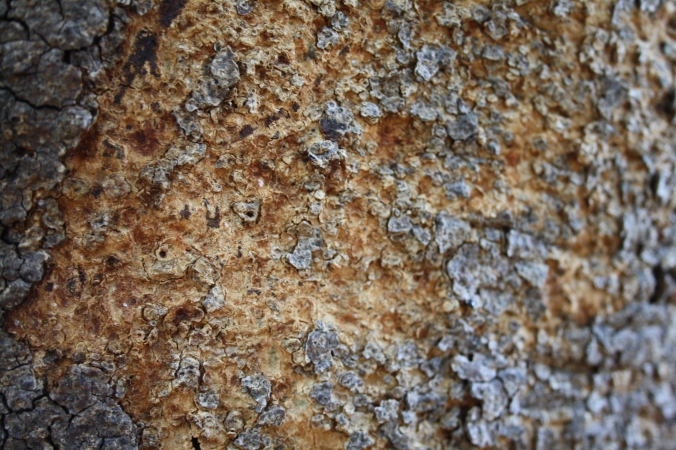
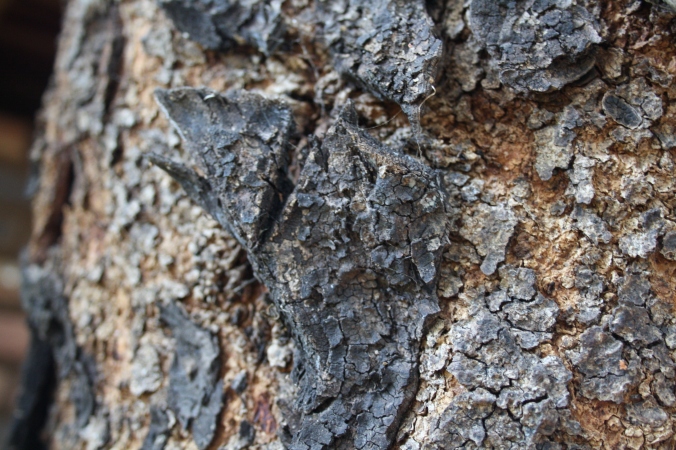
I love the varying textures of the bark, smooth, cracked, knotty.
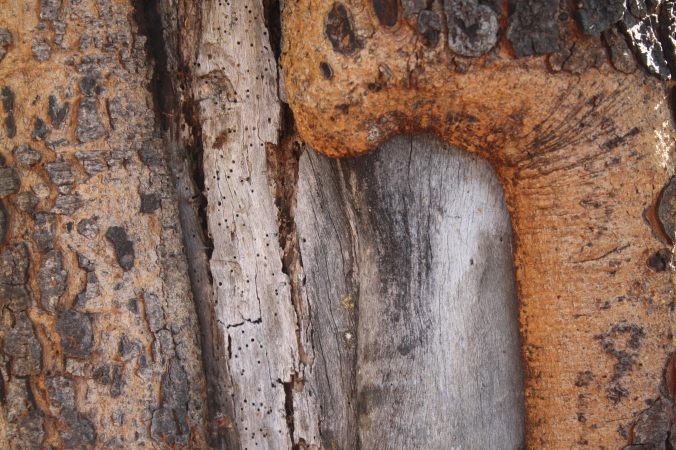
Pockmarked with borer tunnels
The paired leaves look similar to those of the Mopane tree (Colophospermum mopane) which also occurs in this area and it is easy to understand why this tree is sometimes called the Large False Mopane.
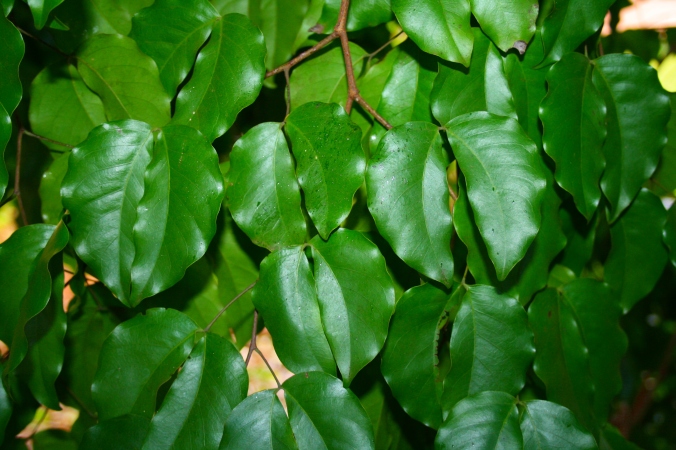
Shining emerald-green in the sunlight
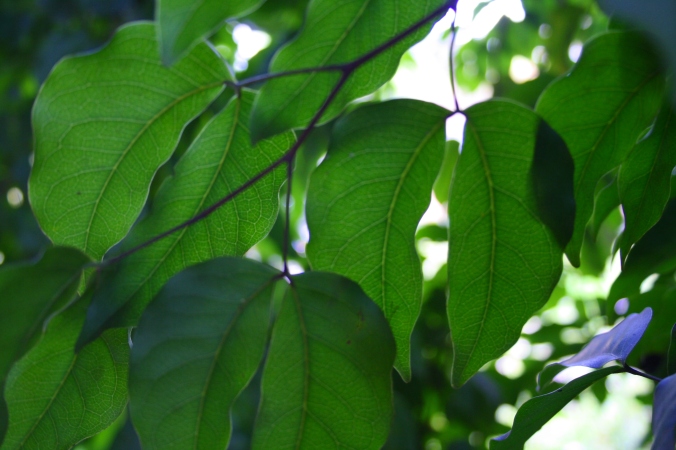
Almost translucent from underneath
The bright red arils, although somewhat tasteless, are edible and the indigenous people pound them into a flour which they cook into a nutritious meal; they do the same with the seeds and I have read somewhere that this has saved many lives in times of famine.
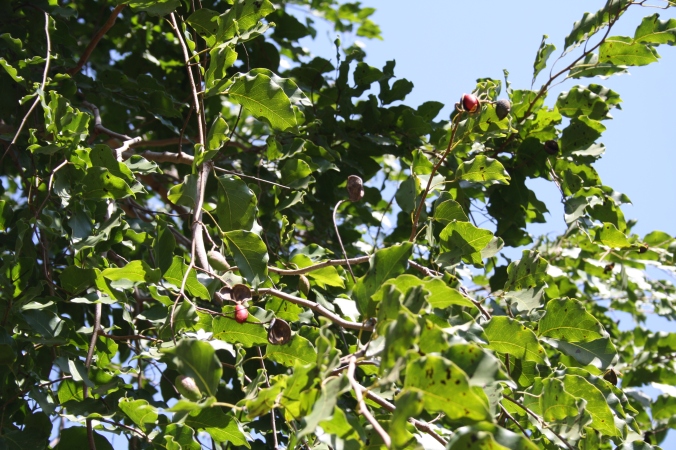
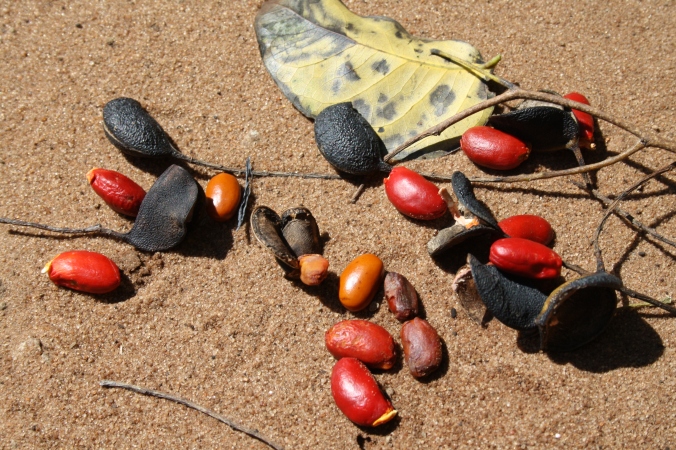
Of course birds love the seeds and arils too, and we are often entertained by the raucous shouting of trumpeter hornbills, sounding uncannily like crying babies as they skirmish and scuffle for the juiciest ones.
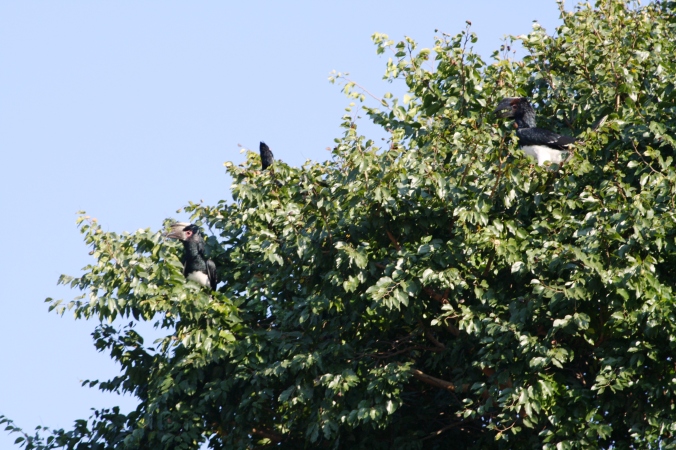
Guibourtia coleosperma is a much sought-after hardwood. When first cut the timber has a unique pinkish-brown colour which later changes to a rich, warm, edible-looking dark chocolate-brown.
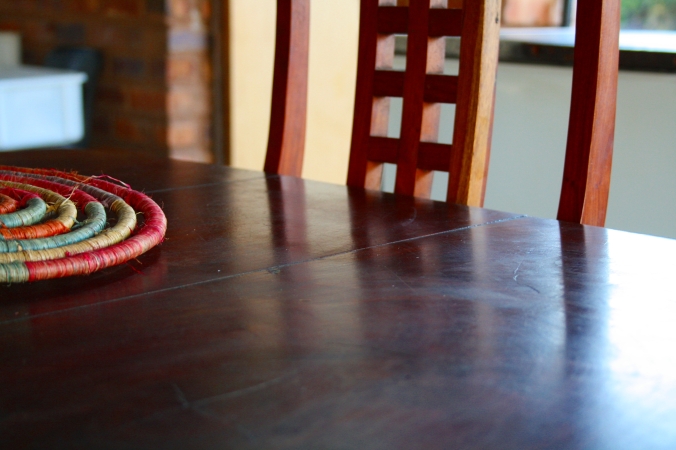
Our own home-made Rosewood dining-room suite, made from wood salvaged during land clearing


 I'll Give You a Letter For That